The Complete Guide to Heirloom Handkerchiefs
Some gifts get used and forgotten. An heirloom handkerchief is the opposite. It gets folded into a bridal bouquet, tucked into a jacket pocket at a memorial, pressed between the pages of a memory box, and handed to a granddaughter decades later still carrying the thread of the moment it was made for. That is what separates a handkerchief from an heirloom handkerchief: one wipes away tears, the other holds them.
What Is an Heirloom Handkerchief?
An heirloom handkerchief is a high-quality cloth handkerchief made from durable fabric, most often fine linen or cotton, and personalized with embroidery, monograms, names, or meaningful messages. Unlike disposable tissues or simple pocket squares, an heirloom handkerchief is designed from the start to last generations. It is something you give with the intention that it will still exist, still be recognizable, and still matter long after the occasion that inspired it.
The word "heirloom" itself tells you everything. An heirloom is an object passed down within a family because it carries emotional significance beyond its material value. A handkerchief earns that status through quality, personalization, and the weight of the moment it witnessed. A bride who carries one on her wedding day and then saves it for her own daughter's wedding has created a thread, literal and figurative, that connects two generations through a single piece of fabric.
What makes a handkerchief rise to heirloom quality comes down to three things: the fabric it is made from, the craftsmanship of the embroidery, and the thoughtfulness of the personalization. A handkerchief embroidered with the couple's wedding date, the bride's new initials, or a line from a meaningful poem becomes a primary source document for a family's story.
Why Families Treasure Handkerchief Heirlooms
There is a long human tradition of keeping small textile objects as memory keepers. Letters, quilts, clothing, fabric holds memory in a way that harder materials do not. It was touched, carried, held. It absorbed something of the moment. A handkerchief passed down through a family carries that kind of intimacy.
Part of what makes the handkerchief so enduring as an heirloom object is its practicality. It was made to be held. A bride grips it in her hand during her ceremony. A father folds it into his breast pocket at his daughter's graduation. A widow holds it through a funeral. These are not decorative objects sitting behind glass. They are used at the most emotionally charged moments of a life, and then preserved precisely because of that use.
Families who pass down handkerchiefs often find that the objects carry stories even when the people who could tell those stories are gone. An embroidered date, a set of initials, a faded thread — these become prompts for the conversations that keep family memory alive. For that reason, many families have begun intentionally creating handkerchief heirlooms rather than waiting to inherit them, choosing to mark each significant occasion with a personalized keepsake handkerchief that enters the family's material history from the moment it is given.
Popular Occasions for Heirloom Handkerchiefs
Wedding Heirloom Handkerchiefs
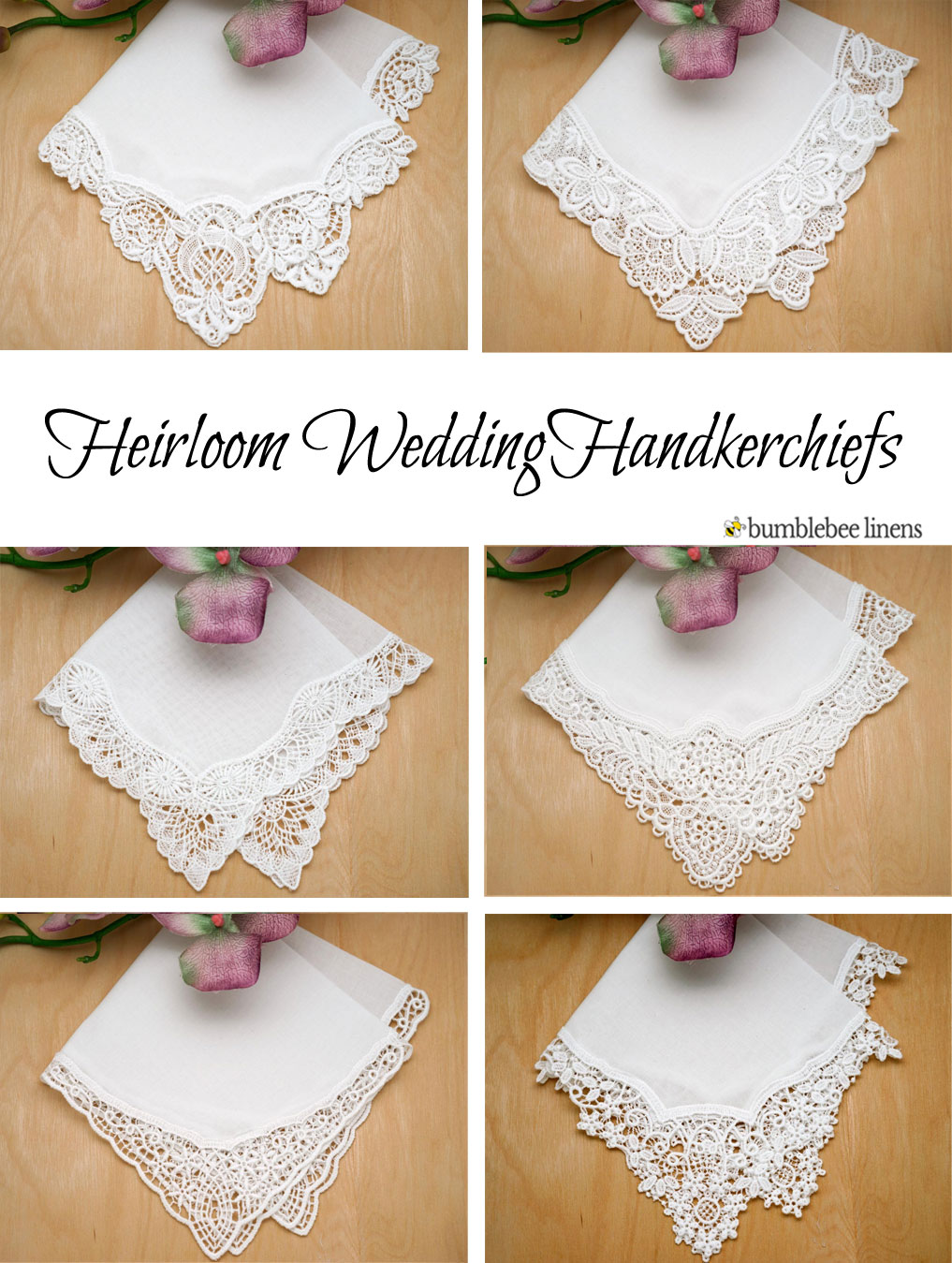
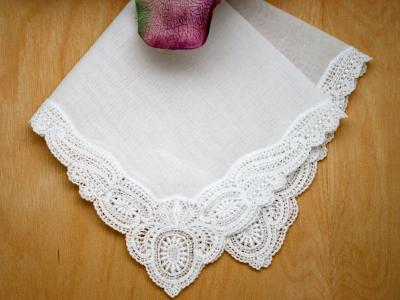
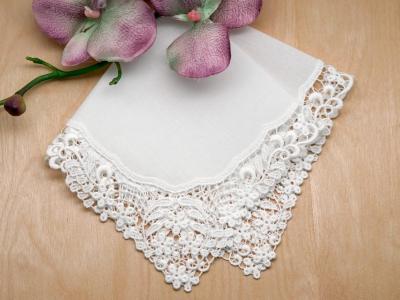
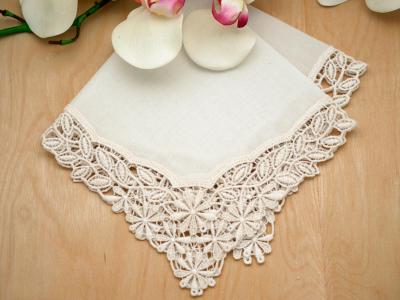
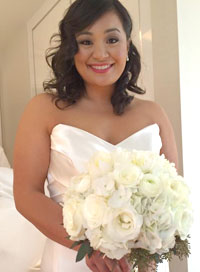
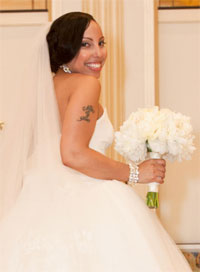
No occasion is more closely associated with heirloom handkerchiefs than a wedding. The tradition of a bride carrying a handkerchief on her wedding day stretches back centuries, rooted in the practical reality that weddings produce tears, happy ones, overwhelmed ones, proud ones. A beautifully embroidered bridal handkerchief transforms that practical object into something a bride can keep for the rest of her life as a tangible piece of her wedding day.
Wedding handkerchiefs are most commonly personalized with the bride's new monogram, the wedding date, the couple's names, or a short meaningful message. Many brides receive one from their mothers as a gift on the morning of the wedding, continuing a tradition that the mother herself may have started on her own wedding day.
The most popular wedding handkerchief gifts include:
- Bridal handkerchiefs embroidered with the bride's new initials or a message from the groom, tucked into her bouquet or held during the ceremony.
- Mother of the bride handkerchiefs personalized with a message of gratitude, one of the most emotionally resonant gifts a bride can give the woman who raised her. These typically carry a heartfelt note about what the relationship has meant, embroidered in thread that will last as long as the fabric.
- Mother of the groom handkerchiefs that acknowledge her role in raising the person the bride is marrying, often a more unexpected and therefore more surprising gift.
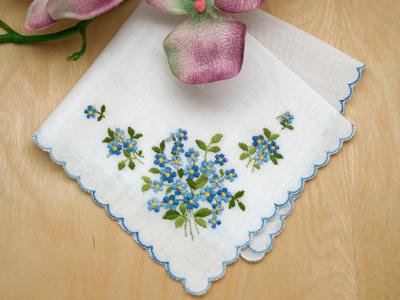
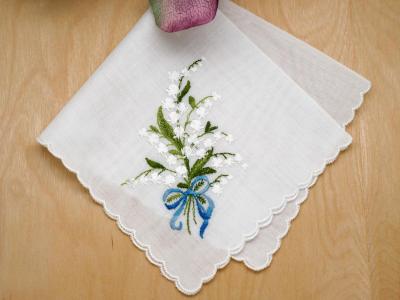
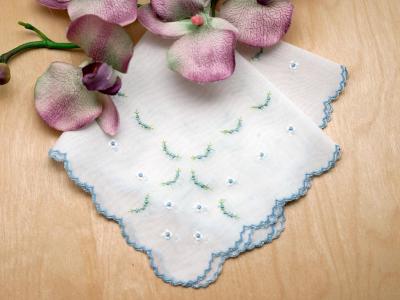
- Something blue handkerchiefs that satisfy the traditional "something old, something new, something borrowed, something blue" requirement while doubling as a keepsake. A handkerchief embroidered in blue thread is a classic interpretation of this tradition, and one the bride will keep long after the borrowed jewelry goes back and the something new is worn out.
- Groom handkerchiefs tucked into the suit pocket, personalized with the wedding date or a private message from the bride, a quiet intimacy visible in every photograph of the ceremony.
Memorial Handkerchiefs
A memorial handkerchief is embroidered with a message of remembrance, a name, a date, a short phrase that honors someone who is gone. These are given at funerals and memorial services as a comfort to the grieving, and they are kept for exactly the same reason as wedding handkerchiefs: because the moment they were part of was one that mattered beyond words.
A memorial handkerchief might carry the name and birth and death years of a loved one, or simply a phrase like "Always with me" or "Gone but never forgotten." For families who want to mark a loss with something lasting and personal, a personalized memorial handkerchief offers a gentleness that most other memorial gifts do not.
Anniversary Gifts
A handkerchief embroidered with a couple's original wedding date and initials makes an anniversary gift that deepens rather than replaces the meaning of their wedding day. For milestone anniversaries, a 25th, a 40th, a 50th, a personalized heirloom handkerchief acknowledges the specific weight of the years in a way that more conventional gifts rarely do.
Mother and Daughter Gifts
Beyond weddings, heirloom handkerchiefs have become a meaningful way to mark the relationship between mothers and daughters at any milestone. A daughter leaving for college, a mother celebrating a birthday, a grandmother meeting a new grandchild, all of these are occasions where a handkerchief embroidered with a message particular to that relationship says something that a card cannot.
Friendship Keepsake Gifts
A personalized handkerchief given to a close friend on a significant occasion, a bachelorette party, a milestone birthday, a difficult moment, carries a tenderness that is rare in gift-giving. It says: I wanted to give you something you will keep.
Choosing the Right Fabric for an Heirloom Handkerchief
The fabric is where quality begins. A handkerchief that will be kept for decades needs to hold its shape, hold its embroidery, and soften gracefully with time rather than deteriorating. The two materials most commonly used for heirloom-quality handkerchiefs are linen and cotton.
Linen Handkerchiefs
Linen is the traditional choice for heirloom textiles, and with good reason. It is woven from the fibers of the flax plant and has a natural strength that actually increases with washing, the opposite of most fabrics. A linen handkerchief that is well cared for will outlast its owner. It has a characteristic crispness when freshly pressed and a beautiful, slightly textured hand that softens over years of use.
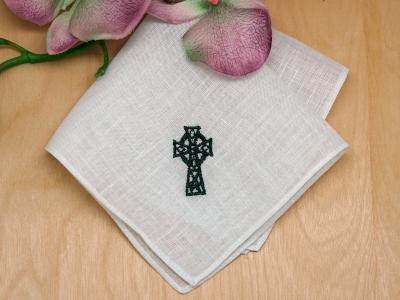
Linen's natural luster gives embroidery a clean, elegant backdrop. Thread colors remain vibrant against linen's natural ivory or white tones, and the fabric's tight weave holds fine stitching with precision. For these reasons, linen is the preferred choice for formal occasions, weddings, memorials, milestone anniversaries, where the handkerchief will be preserved as a keepsake.
Cotton Handkerchiefs
High-quality cotton handkerchiefs, particularly those woven from long-staple cotton, offer a softness that linen does not. They are gentle against the skin, wash easily, and hold embroidery well. For recipients who prefer a softer feel, or for everyday keepsakes rather than formal occasions, fine cotton is an excellent choice.
The best cotton handkerchiefs are made from Egyptian or Pima cotton, both of which have longer fibers that produce a noticeably smoother, more durable fabric than standard cotton. These are not the cotton handkerchiefs sold in drugstores. They are the cotton handkerchiefs that end up in memory boxes.
Which to Choose
For a wedding or memorial gift, any occasion where the handkerchief is meant to be preserved and eventually passed down, linen is the better choice. Its natural durability and classic appearance suit the gravity of those moments. For a softer, more everyday keepsake or for recipients who simply prefer a finer texture, a long-staple cotton handkerchief is a beautiful alternative. Either way, fabric quality is what separates a keepsake from a commodity.
Personalization Options for Heirloom Handkerchiefs
Personalization is what transforms a handkerchief into a keepsake. The specific combination of text, embroidery style, thread color, and placement turns a piece of fabric into a document of a particular relationship at a particular moment in time. Here is what to consider when choosing how to personalize an heirloom handkerchief.
What to Embroider
- Names and initials are the most classic choice. A bride's new monogram, a couple's intertwined initials, a grandmother's full name embroidered as a gift to a granddaughter, these turn the handkerchief into an artifact of identity.
- Dates add specificity and permanence. A wedding date, a birth date, an anniversary date tells the future reader exactly when this object entered the family's history.
- Short messages are perhaps the most emotionally powerful choice. A line to a mother on the morning of a wedding, "I could not have become who I am without you", is a gift that will be read and re-read over the course of a lifetime. The constraint of the fabric forces a clarity and focus that longer cards often lack.
- Meaningful phrases from poems, songs, religious texts, or family sayings carry the cultural and emotional context of a family's particular story.
Embroidery Styles
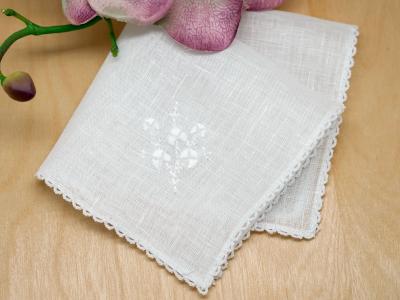
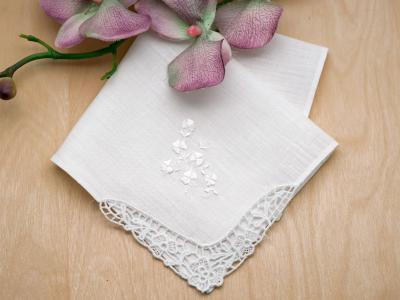
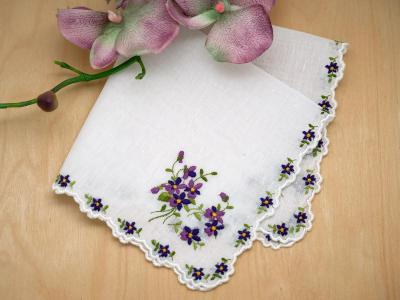
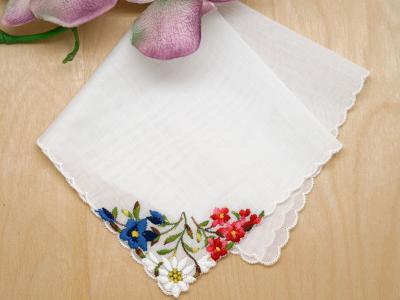
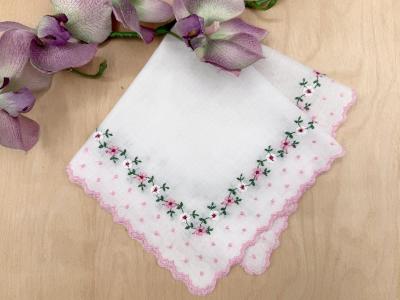
Different embroidery styles suit different occasions and aesthetics. A classic script font in a single thread color is understated and timeless, appropriate for a formal wedding or memorial. A more decorative border adds a sense of occasion and artistry. A simple block monogram reads as clean and modern. Choosing the right embroidery style is as much about the personality of the recipient as it is about the occasion.
Thread Color
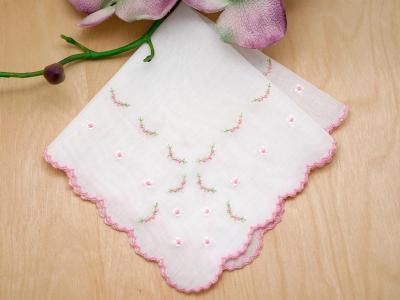
Thread color carries its own symbolism. White or ivory thread on a white handkerchief is the most formal and classic choice, appropriate for weddings and memorials. Blue thread is the obvious choice for a something blue handkerchief and also carries a quiet sense of calm. Soft pinks, sage greens, and dusty mauves feel warmer and more personal for gifts between friends and family. The thread color is a small choice that makes a significant difference in the feel of the finished piece.
Placement
Where the embroidery sits on the handkerchief affects how the handkerchief is displayed and used. A corner monogram sits elegantly when the handkerchief is folded in a pocket. A centered message reads clearly when the handkerchief is held or displayed flat. Most brides choose corner or bottom-edge placement so the embroidery is visible in photographs of the bouquet or ceremony.
How to Preserve a Family Handkerchief
An heirloom handkerchief can last a hundred years or more with proper care. The principles of textile preservation are simple, but they matter, especially for handkerchiefs that will be passed down.
- Washing should be done by hand or on a gentle machine cycle in cool water with a mild, pH-neutral detergent. Hot water weakens linen and cotton fibers over time and can cause embroidery thread to bleed. Turn the handkerchief inside out to protect the embroidery.
- Drying should be done flat or hung to air dry, away from direct sunlight. UV exposure is the primary cause of yellowing and thread fading in textile heirlooms.
- Pressing with a warm iron on the reverse side will restore the handkerchief's crispness and appearance before it is folded for storage.
- Storage is the most important variable for long-term preservation. Fold the handkerchief in acid-free tissue paper, never in regular tissue or plastic. Store it in a cool, dry, dark place — a cedar chest, an archival box, or a linen storage bag. Plastic bags trap moisture and cause yellowing; avoid them entirely for anything meant to last.
- Framing is a beautiful option for handkerchiefs that will be displayed rather than used. Acid-free matting and UV-protective glass will keep a framed handkerchief vibrant for decades. Many families frame wedding handkerchiefs alongside a wedding photo as a way of telling the story of an occasion in a single composition.
- Rotation and handling with clean, dry hands prevents the natural oils of the skin from degrading the fiber. If the handkerchief is in regular use, a gentle wash after each use is the simplest preservation practice.
The History of Wedding Handkerchiefs
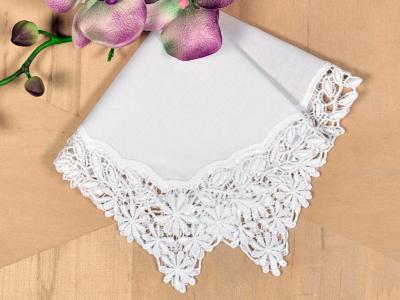
The tradition of carrying a handkerchief at a wedding has roots that stretch back at least to medieval Europe, when a fine white cloth was both a luxury item and a symbol of social standing. Handkerchiefs were embroidered, edged in lace, and given as tokens of love, a woman might drop a handkerchief to signal interest in a suitor, who would then return it as a form of courtship.
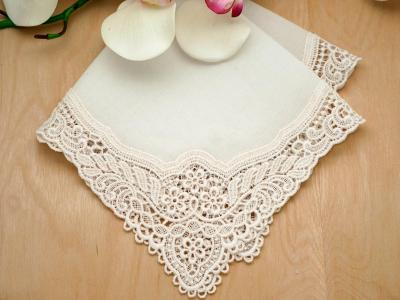
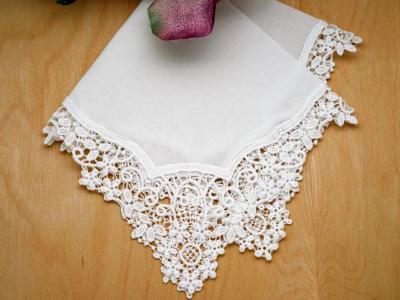
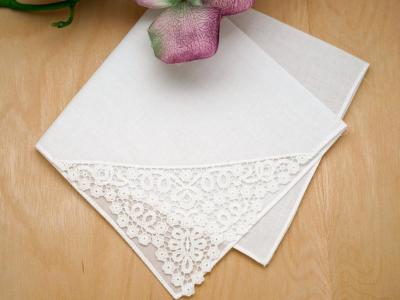
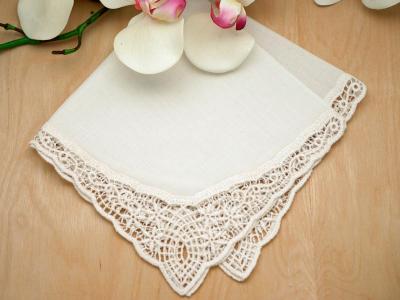
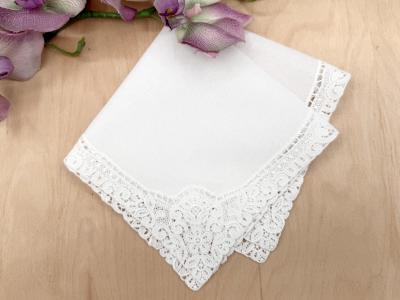
By the Victorian era, handkerchiefs had become deeply embedded in the language of gifts and sentiment. They were exchanged between lovers, given as mourning tokens, and treasured as keepsakes in ways that parallel exactly how they are used today. The tradition of carrying a lace-edged or embroidered handkerchief to a wedding was well established by the nineteenth century, and the association of a bride's handkerchief with good luck and future fertility was common enough to be widely recorded.
The "something old, something new, something borrowed, something blue" tradition, with its invitation to carry an object that connects the present moment to the past, made the handkerchief a natural fit. A mother's handkerchief became the "something old" and "something borrowed." A freshly embroidered one became the "something new." A handkerchief embroidered in blue thread became the "something blue." Often, a single carefully chosen handkerchief served more than one of these purposes at once.
What is striking about the tradition is how little it has changed. The handkerchief is one of the few wedding objects that has survived every shift in fashion and trend relatively intact. Brides in the twenty-first century carry embroidered handkerchiefs for the same reasons brides in the nineteenth century did: because weddings produce tears, because the object can be kept, and because the act of giving one says something about the permanence of the relationship it marks.